
Examination Board uses UXpro’s usability platform
The client
At the Secondary Education Examination Board people can obtain a diploma or certificate through self study and at their own pace.
The challenge
The Secondary Education Examination Board gives everyone the opportunity to obtain their secondary education diploma through self study and at their own pace. Anyone who participates in the exams does everything in the student journey from a digital platform: registering for a course of study, planning the exams, preparing for exams, consulting results, asking questions, etc.
Everything the Examination Board does is part of this candidate platform, making itb by far their most important information and communication tool. Because of this the Examination Board was interested in our usability testing platform from the start.
What we did
1. Training service designers
2. Determining scenarios
3. Pilot testing
4. Usability testing
5. Analysis
Approach
Training usability testing
In the first phase of this experiment, we provided the Examination board’s service designers with a brief training on usability testing. This way we familiarized them with the platform.
Determining scenarios
After that, together we determined the scenarios to be validated through the experiment.
Pilot testing
A pilot test was conducted in order to verify the scenarios and to test the moderation skills of the Examination Board employees.
Usability testing
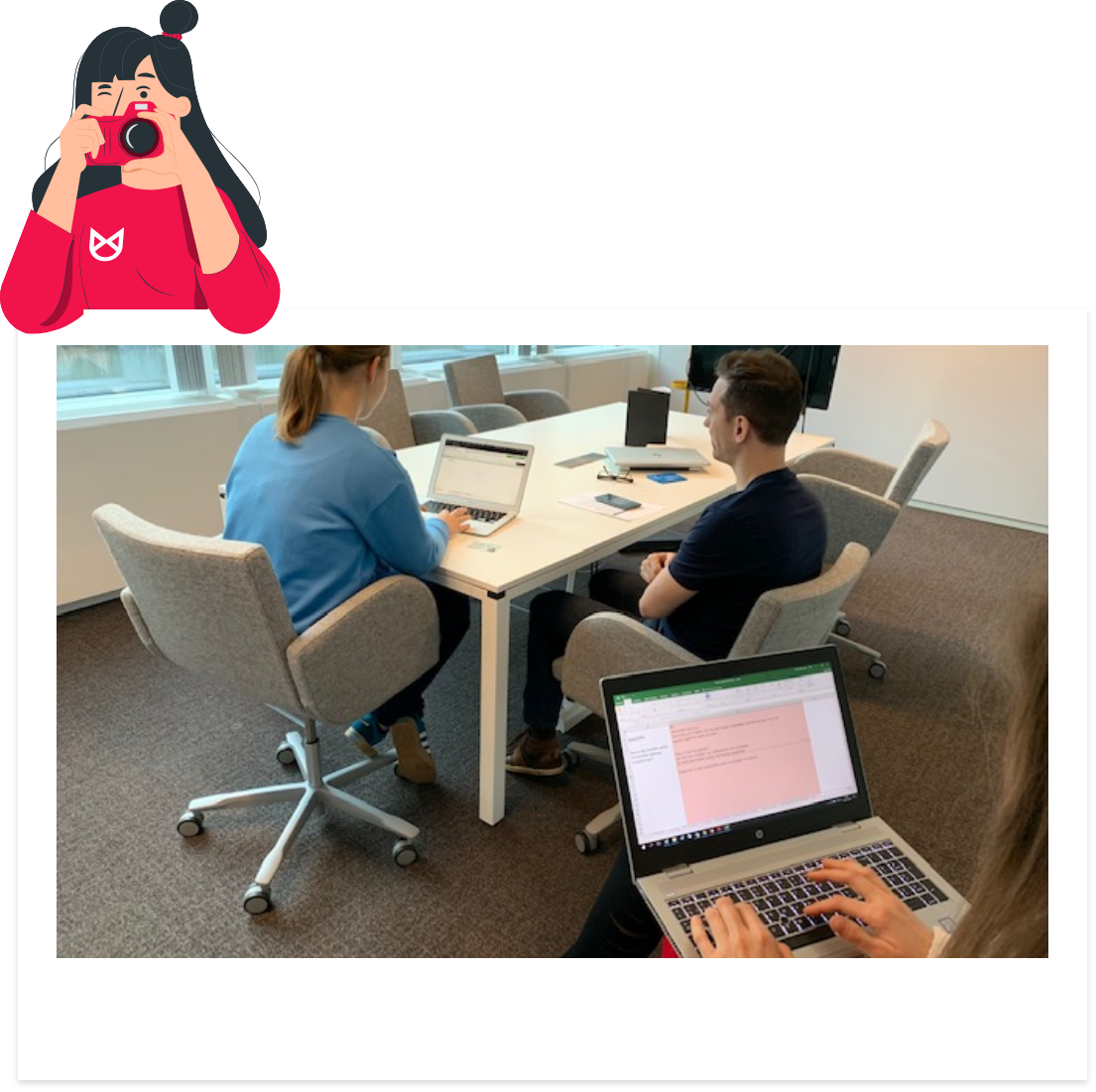
In this next step, the final usability test was set up by the Examination Board. Various future users of the digital platform went through the different scenarios. Especially their behavior and feedback were stored on our usability testing platform.
Analysis
User feedback and behavior were analyzed using our usability testing platform. Due to COVID-19 regulations, the case managers ran the usability tests from their own home, moderated remotely by our UX expert.
Result
Our usability testing platform enabled VLAIO to detect where things can actually go wrong when a user interacts with the application. Our final report gave VLAIO some insights on where the application was not working properly, and in also contained suggestions on how to make the application more user friendly, for example by:
- using icons consistently
- making navigation elements more visible
- scaling lists dynamically
- etc
The test results also showed where additional training was needed.
Increased awareness of the role of UX-design
The big added value of this experiment is that it has contributed to more awareness of the role that UX design plays in the development of applications, and therefore also in a better user experience.
Ready to take your solution to the next level?
So are we!
Customers we recently helped